Replace Manual Interpretation With Repeatable Logic
Traditional calibration review often depends on analyst judgment, disconnected spreadsheets, and inconsistent evaluation criteria. This introduces variability, slows review cycles, and creates risk when decisions must be justified later.
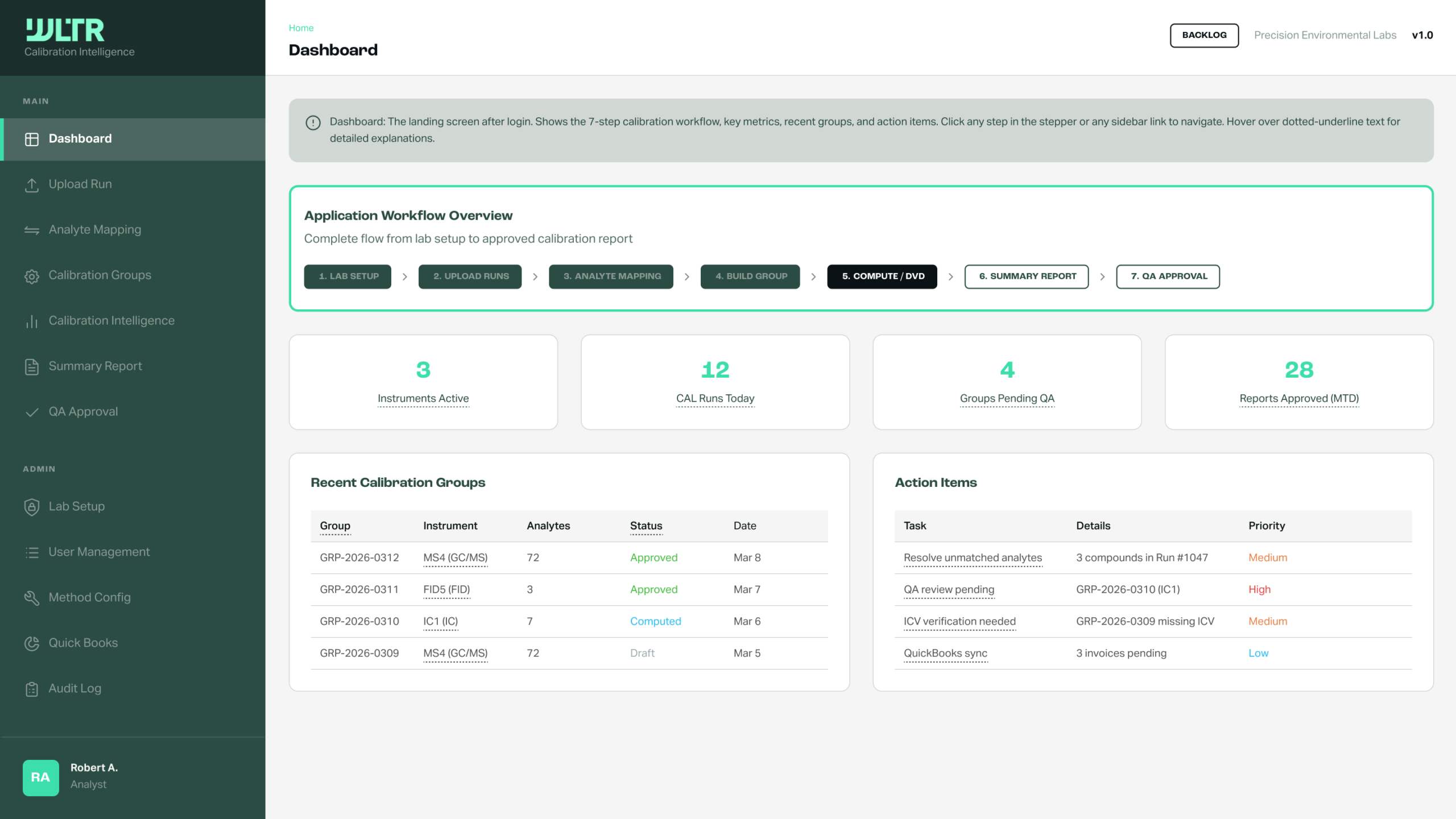
WLTR replaces fragmented interpretation with deterministic validation logic—ensuring that calibration data is assessed using consistent, predefined mathematical rules across all methods, analytes, and datasets.
What Deterministic Validation Delivers
Standardized Evaluation
Apply the same validation logic across all calibration datasets
Reduced Subjectivity
Minimize reliance on individual interpretation
Clear Pass/Fail Criteria
Define outcomes based on structured mathematical rules
Faster Review Cycles
Eliminate manual bottlenecks and repeated analysis
Traceable Decisions
Maintain clear logic behind every validation outcome
Audit Readiness
Support defensible review processes with consistent outputs
Built for High-Confidence Review
Whether evaluating simple calibration curves or complex multi-analyte datasets, deterministic validation provides a structured foundation for consistent review. Teams gain clarity into how results are generated and confidence in the decisions that follow.