BIOTECH

Calibration Intelligence Infrastructure for Biologics QC.

Detect calibration failures before BLA review, Form 483, or warning letter exposure.
POSITIONING STATEMENT

The Verification Layer Above Your Cds.

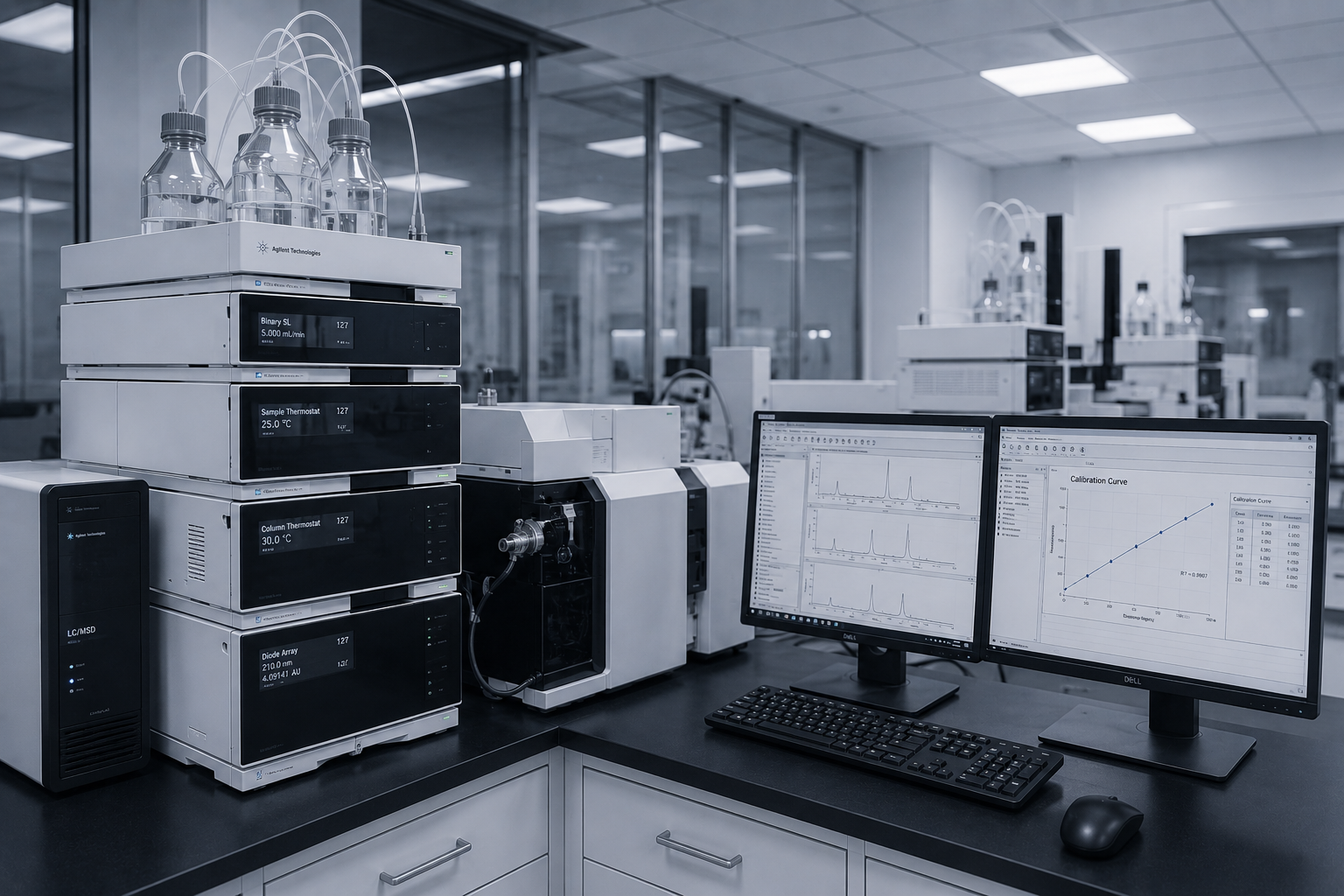
WLTR is calibration data intelligence infrastructure. It sits above your existing chromatography data system — Waters Empower, Thermo Chromeleon, Agilent OpenLab, Shimadzu LabSolutions — as an independent layer that re-evaluates calibration mathematics against your own data. WLTR does not modify your validated method. WLTR does not generate reportable results. WLTR does not require a comparability filing or BLA supplement to deploy.
 
The CDS remains your system of record. Every calibration decision, every reportable concentration, every lot-release calculation is produced by the CDS in accordance with the approved method. WLTR verifies what the CDS produces. WLTR identifies calibration models that pass system suitability on the surface but contain undetected error. WLTR documents that verification in regulator-aligned language.
 
WLTR is built for laboratories operating under 21 CFR Parts 210, 211, 600, 601, 610, and 1271; under 21 CFR Part 11 for electronic records; under ICH Q2(R2), Q6B, Q5E, Q14, and M10; under EU GMP Annex 11 and Annex 1; under ISO/IEC 17025; and under USP and Ph. Eur. compendial standards. The platform is positioned within the same regulatory category as Excel, Python, and internal audit scripts — quality-system tools that verify CDS outputs without altering the analytical method.
 

The Regulatory Reality.

Biologics enforcement is no longer a tail risk. FDA’s reorganization of the Office of Regulatory Affairs into the Office of Inspections and Investigations, the launch of the Elsa AI system to prioritize inspections, and the explicit shift toward for-cause inspection have moved data integrity and chromatographic record review into the center of every Form 483 and warning letter conversation. The vocabulary regulators now use is specific: data integrity, complete data, audit trail review, validated for intended use, scientifically sound test procedures.

WARNING LETTERS — DRUGS & BIOLOGICS, FY25
0

Eliquent Life Sciences analysis of FDA Compliance Dashboard data, March 2026 — a 59% increase from FY24.

SHARE OF FDA INSPECTIONS NOW FOR-CAUSE
0 %

Redica Systems analysis of FDA inspection data, February 2026 — approximately 2.5x the prior baseline. For-cause inspections carry a 33.5% probability of an Official Action Indicated classification.

CAGR — BIOTECH SaaS-CDS MARKET, 2022–2027
0 .2%

TechSci Research, Global SaaS-Based Chromatography Data Systems Market, September 2021 — projected to grow from USD 270.7M to USD 770.9M.

Enforcement Evidence.

Recent FDA actions where data integrity, CGMP procedural control, or chromatographic record review were cited.

FDA CDER · JUNE 28, 2024

Action : FDA issued a warning letter to **Berkeley Biologics, LLC** (previously Elutia, Inc.; formerly Aziyo Biologics, Inc.) citing CGMP violations under 21 CFR Parts 210 and 211, including failure to establish written procedures for production and process controls and acceptance of qualification batches that failed established acceptance criteria, including sterility testing.

Outcome : Products were determined adulterated within the meaning of section 501(a)(2)(B) of the FD&C Act. The firm committed to halting manufacture and distribution of viable bone matrix products pending remediation.

FDA CBER · JANUARY 17, 2025

Action :  FDA issued a warning letter to **Chara Biologics, Inc.** citing significant violations including inadequate aseptic processing, lack of validated manufacturing processes, and false or misleading labeling on umbilical-cord-derived products marketed as unapproved biologics.
Outcome : Products were classified as unapproved new drugs and unlicensed biological products. The firm was placed on notice that continued violations could result in seizure or injunction.

FDA CDER · 2024 INSPECTION CITATION

Action : FDA inspectors cited **Indoco Remedies** for inadequate procedural control over chromatographic audit trail review, specifically noting that procedures governing chromatography analyses did not require review of all audit trail data and that personnel were unaware of the requirement to review the Empower Message Center data during inspection.

Outcome : The citation became one of FDA’s most-referenced 2024 examples of CDS-level data integrity failure and is cited in current FDA enforcement training material.

Of biologics warning letters issued from 2010 to 2025, the three most frequent CGMP root causes were written procedure deviations (17%), stability testing failures (15%), and gaps in QC review of production records (14%). Source: Radhakrishnan et al., Journal of Pharmaceutical Innovation, October 2025.

How WLTR Fits.

LIMS / ELN

New Layer

WLTR — CALIBRATION INTELLIGENCE LAYER

CDS Software

WLTR connects above the CDS layer and beneath the LIMS layer. It reads calibration data from the CDS, re-evaluates the underlying mathematics against the laboratory’s own data set, and writes verification records back into the audit trail. The CDS continues to acquire, integrate, and report. WLTR continues to verify. The two layers are independent by design.

What WLTR Does.

WLTR is built to a strict regulatory boundary. It verifies, evaluates, and documents. It does not modify, replace, or augment any compliance-critical calculation.

01

Validates

WLTR re-evaluates calibration models against the laboratory’s own data. The platform applies deterministic mathematics — not probabilistic inference — to identify calibration curves that meet system suitability on the surface but contain undetected linearity, weighting, or fit error. Results are scoped to the analyte panels and concentration ranges in the validated method, with no method modification.

02

Verifies

WLTR verifies CDS-generated calibration outputs against the underlying chromatographic data and against the laboratory’s documented acceptance criteria. The platform serves as the independent verification mechanism that audit-trail review and Tier II QA review require. WLTR does not replace analyst review. WLTR documents that review.

03

Documents

WLTR produces audit-ready records in regulator-aligned language — 21 CFR Part 11, ICH Q2(R2), ICH M10, EU Annex 11. Output formats include calibration model evaluation reports, audit-trail review summaries, and exception documentation suitable for inclusion in batch release packages, BLA supplements, and inspection response binders.

Who It Is For.

01

LAB DIRECTOR

QC Directors, Heads of Analytical Development, and Senior Directors of Quality Operations responsible for instrument fleet planning, CDS platform decisions, and contract laboratory qualification across drug substance and drug product release. WLTR reduces the audit-defensibility cost of operating Empower in QC, Chromeleon in development, and additional CDS platforms at one or more CDMOs.

02

QA OFFICER

QA Specialists, QA Managers, and Directors of Quality Assurance who own SOPs governing CDS use, audit-trail review, manual integration controls, calibration acceptance criteria, and OOS investigation. WLTR documents the verification step that 21 CFR 211.194(a) requires and that 21 CFR 211.68(b) audit citations recur on.


03

ANALYTICAL CHEMIST
QC Analysts, Senior QC Associates, and Analytical Development Scientists running release-testing chromatography for monoclonal antibodies, vaccines, gene and cell therapy products, biosimilars, and recombinant proteins. WLTR reduces the manual-integration justification and Tier II re-review burden on broad and tailing biologics peaks where ICH Q2(R2) acceptance criteria are most exposed.

04

OWNERSHIP
CEOs, Chief Quality Officers, and Heads of Manufacturing at clinical-stage and commercial biopharmaceutical companies whose career-risk events are CMC-driven Complete Response Letters, Form 483 escalation, or consent decree. WLTR reduces the probability that a calibration record becomes the document quoted back during BLA review.

THE BOUNDARY.

WLTR does not modify your method. WLTR verifies what your method produces.

The CDS remains the system of record under 21 CFR Parts 211, 600, 610, and Part 11. WLTR operates as a quality-system layer in the same regulatory category as Excel, Python, and internal audit scripts. No comparability assessment under ICH Q5E. No BLA supplement. No revalidation.

Three things WLTR does.
Nothing it should not.

For QA, analytical development, and quality operations leadership at biopharmaceutical sponsors and CDMOs.