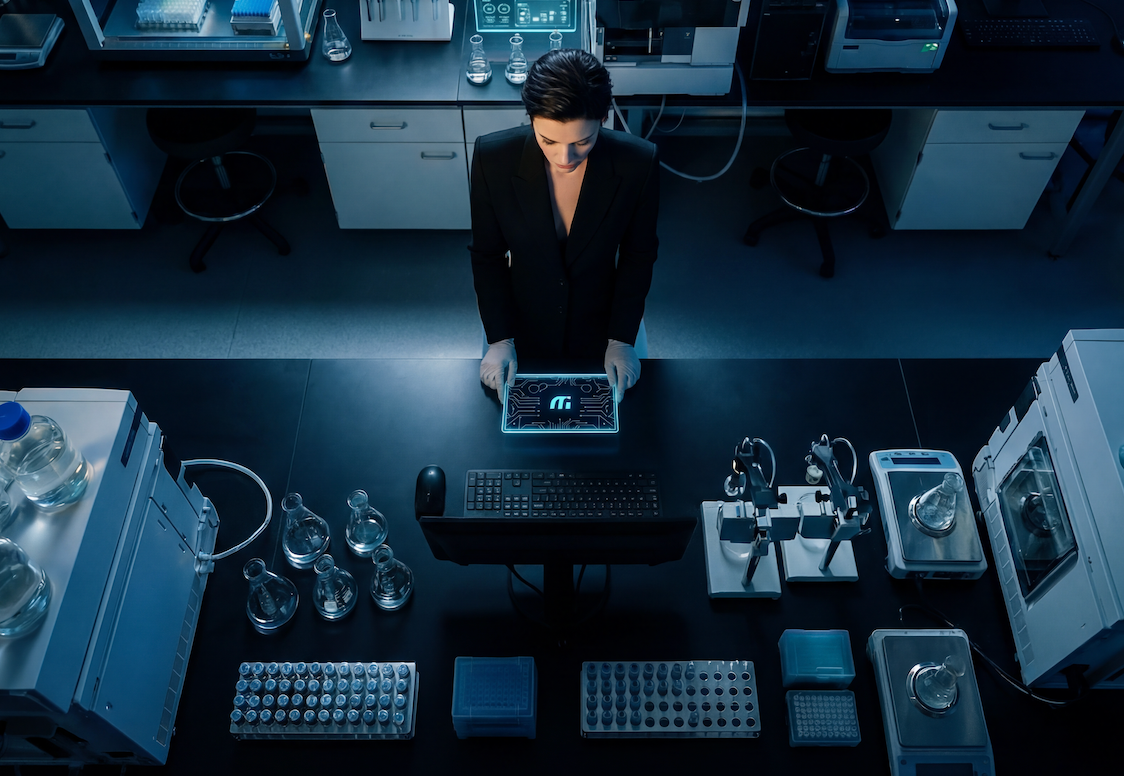
Defend reproducibility before it shows up in the audit trail. WLTR re-evaluates calibration mathematics from your CDS against deterministic standards — without modifying methods, instruments, or institutional review.
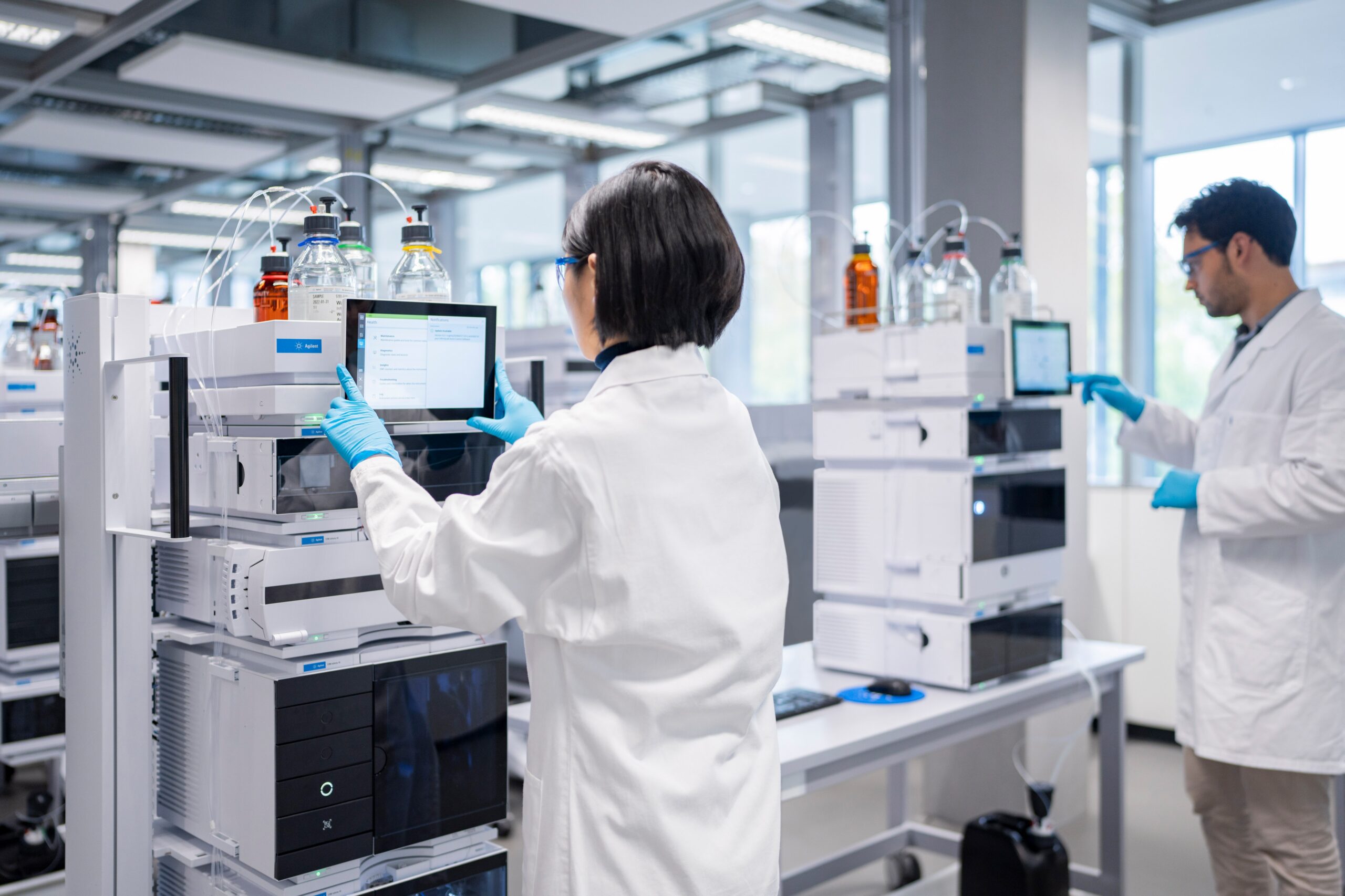
WLTR is calibration data intelligence infrastructure for laboratories using chromatography instrumentation. WLTR sits above existing CDS platforms — Thermo Chromeleon, Waters Empower, Agilent OpenLab, and the vendor-bundled software supporting HRMS instrumentation — as an independent intelligence layer. WLTR re-evaluates calibration mathematics using the laboratory’s own data, detects calibration models that pass on the surface but contain undetected error, and documents calibration verification in the regulatory and institutional language each oversight body expects.
WLTR serves as a quality-assurance verification layer, not a method modification. The CDS remains the system of record for all reportable results. WLTR evaluates and verifies CDS outputs but does not generate or replace them. Methods stay untouched. Institutional Quality Assurance Units, Research Integrity Officers, and core facility directors retain full authority over what reaches publication, an FDA submission, or an EPA pesticide registration data package.
The page is built for laboratories operating under 21 CFR Part 58 (FDA Good Laboratory Practice for Nonclinical Laboratory Studies), 40 CFR Part 160 (EPA FIFRA Good Laboratory Practice Standards), 42 CFR Part 93 (PHS Policies on Research Misconduct, with the Office of Research Integrity’s 2024 Final Rule applicable to all institutions beginning January 1, 2026), NIH Rigor and Reproducibility policy (NOT-OD-15-103 and NOT-OD-18-228), and ISO/IEC 17025:2017 for accredited core facilities.
Reproducibility failure has become an enforcement category. The Office of Research Integrity treats undocumented calibration and uncontrolled instrument records as data integrity findings under 42 CFR Part 93. NIH grant reviewers evaluate authentication of key chemical resources and rigor of experimental design as scoring criteria. Journals retract papers when calibration cannot be reconstructed from supplied materials. Institutional administrators face direct reputational and federal-funding exposure when a finding is published. The vocabulary regulators and journals use is consistent: data integrity, scientific rigor, reproducibility, and the research record.
Source: HHS Office of Research Integrity, 2024 Annual Report (December 2025)
Source: Baker, M., "1,500 scientists lift the lid on reproducibility," Nature 533:452–454 (May 2016)
Source: TechSci Research, Global SaaS-based Chromatography Data Systems Market (2022, base year 2021)
CDS remains the system of record. WLTR evaluates raw calibration data and documents deterministic verification. No method changes. No instrument access required.
WLTR re-evaluates calibration mathematics from raw CDS data against deterministic standards. Calibration models that pass system-suitability checks but contain mathematical error are detected before they propagate to publication, an FDA submission, or an EPA pesticide registration data package.
WLTR verifies calibration model quality independently without altering the analytical method or the CDS audit trail. Quality Assurance Unit reviewers, Research Integrity Officers, and core facility directors receive a separate, traceable verification record alongside the CDS-generated audit trail they already have.
WLTR documents calibration verification in the language each oversight body expects — ORI inquiry response, GLP study file, NIH grant authentication of key chemical resources, ISO/IEC 17025 technical record. Records are retrievable for inspection on demand.
You oversee shared instrumentation supporting many funded projects, manage instrument utilization and recharge rates, and answer to investigators whose grants and inspections depend on what your facility produces. You need an audit-defensible verification layer that does not compete with your CDS, your LIMS, or your existing QA workflow.
You own the documentation that determines whether the institution survives an ORI inquiry, an FDA preclinical inspection, or an EPA FIFRA audit. You are responsible for 42 CFR Part 93 compliance and for the quality assurance unit functions defined under 21 CFR Part 58 § 58.35. You need calibration verification you can hand to a regulator without rebuilding it from raw data.
You build calibration curves for novel analytes where verified reference materials may not exist. The method itself is part of your science. You need verification that catches calibration error before it reaches a thesis defense, a journal submission, or an investigator deliverable — without forcing you to learn another platform.
You are the Department Chair, Dean of Research, Vice President for Research, or institutional officer accountable for grant compliance, retraction risk, and federal funding relationships. A research misconduct finding is an existential institutional event. You need infrastructure that documents calibration defensibility before exposure becomes public.
A 30-minute walkthrough of WLTR against your CDS calibration data. No method changes. No instrument access required.