For Oil & Gas and Mining Laboratories

Calibration data prices your shipment and defends your disclosure.

WLTR re-evaluates calibration mathematics across your existing CDS — before EPA Notices of Violation, BLM custody-transfer disputes, SEC resource restatements, or ISO/IEC 17025 nonconformities.
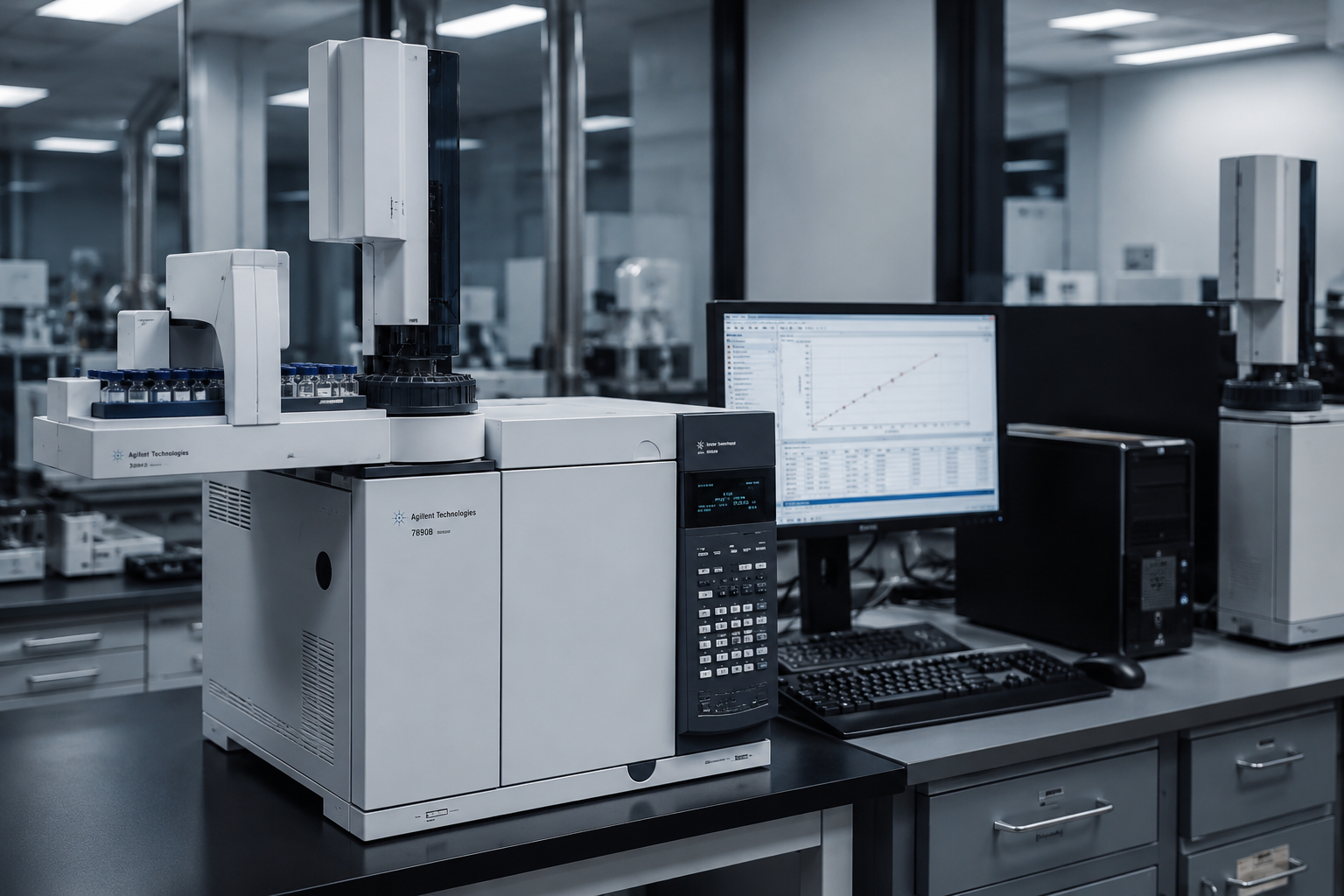
THE VERIFICATION LAYER ABOVE YOUR CDS

WLTR is calibration data intelligence infrastructure for regulated laboratories.

WLTR is a deterministic calibration validation platform that sits above your existing chromatography data system as an independent intelligence layer. WLTR re-evaluates calibration mathematics against your own data, identifies models that pass on the surface but con  tain undetected error, and produces audit-ready documentation in regulator-aligned language.

WLTR operates as a QA/QC verification layer — never as a modification to an analytical method. The CDS remains your system of record. WLTR does not redefine ASTM or API MPMS acceptance criteria. WLTR does not alter custody-transfer calculations. WLTR does not modify NI 43-101 or Regulation S-K 1300 reportable values. Every WLTR output is reviewable, traceable, and defensible.

This page is built for laboratories operating under the U.S. Environmental Protection Agency’s 40 CFR Part 1090 fuel quality programs, EPA SW-846 chromatographic methods, the Bureau of Land Management’s 43 CFR Subpart 3175, the EPA Petroleum Refinery Sector Rule (40 CFR Part 63 Subparts CC and UUU), the Mine Safety and Health Administration’s 30 CFR Parts 56, 57, and 60, the Securities and Exchange Commission’s 17 CFR Part 229.1300, Canadian National Instrument 43-101, ISO/IEC 17025:2017, and the ASTM Committee D02 method portfolio.

THE REGULATORY REALITY

Calibration is now an enforcement category.

In oil and gas, EPA criminal investigations have repeatedly cited gas-chromatography data manipulation as the operative offense, charged under 18 U.S.C. 1001 false statements and Clean Air Act provisions. In mining, securities regulators have framed assay-data anomalies as material disclosure failures under Regulation S-K 1300 and National Instrument 43-101. The vocabulary regulators use is consistent: data falsification, data integrity, QA/QC failure, falsification of records.

U.S. PETROLEUM REFINERIES IN OPERATION
0

Harvard Environmental and Energy Law Program, April 2025.

ENVIRONMENTAL LAB FINE FOR GC TEST FALSIFICATION
$ 0 M

U.S. Environmental Protection Agency, February 2002.

FALSIFIED LAB REPORTS BY A SINGLE LABORATORY CEO
0

U.S. Department of Justice, February 2022.

Enforcement Evidence

What calibration-data failures
look like on the public record.

U.S. DOJ — DISTRICT OF NEW JERSEY — SEPTEMBER 2000

Action : Caleb Brett U.S.A., Inc., a Linden, New Jersey testing laboratory, and three of its supervisors pleaded guilty to a federal conspiracy to make false statements to EPA in connection with gas-chromatography analyses of reformulated gasoline.

Outcome : Employees admitted that GC testing data was changed to make samples appear to comply with EPA reformulated-gasoline standards covering hundreds of millions of gallons of fuel.

U.S. EPA — NORTHERN DISTRICT OF TEXAS — FEBRUARY 2002

Action : Intertek Testing Services, Inc., of Richardson, Texas, was fined nine million dollars for falsifying environmental test results used at Superfund sites, Department of Defense facilities, and hazardous waste sites.

Outcome : EPA identified that gas-chromatography analysts had manipulated results to save time; one former employee was sentenced to home detention and probation, four others to probation.

U.S. DOJ — WESTERN DISTRICT OF TENNESSEE — FEBRUARY 2022

Action : The chief executive officer of Environmental Compliance Testing in Memphis pleaded guilty to submitting at least 405 false laboratory reports and chain-of-custody forms to two state environmental agencies in connection with Clean Water Act discharge testing for industrial customers.

Outcome : The defendant pleaded guilty to knowingly making and using false documents within the jurisdiction of EPA, facing a maximum penalty of five years in prison.

ONTARIO SECURITIES — TSX — MAY 1997

Action : Bre-X Minerals collapsed when independent laboratory testing of duplicate core samples identified gold inconsistent with hard-rock origin, exposing a multi-year salting fraud at the Busang project in Indonesia.

Outcome : Resource estimates of up to 70 million ounces were invalidated, shares became worthless, and the case became the foundational rationale for QA/QC mandates under National Instrument 43-101.

ONTARIO SECURITIES — TSX-V — MAY 2024

Action : Red Pine Exploration disclosed assay discrepancies at its Wawa, Ontario gold project after May 1, 2024, with shares falling sixty percent on the announcement.

Outcome : The company estimated that doctored assays could lower its project resource by as much as twelve percent, triggering a resource re-estimation and an internal investigation.

How WLTR Fits

An independent verification layer.
Above the CDS. Below the LIMS.

LIMS / ELN

New Layer

WLTR

CDS Software

WLTR connects to your existing CDS installation and re-evaluates calibration mathematics against your own data, without touching your analytical methods. The CDS remains the system of record. WLTR sits above it as the verification layer.

What WLTR Does

Three things WLTR does.
Nothing it should not.

01

Validates
WLTR validates initial calibration mathematics across nine model forms against the laboratory’s own data, surfaces best-fit selection through a metadata dashboard, and re-quantitates each calibration point in real time as the analyst evaluates rogue standards or reweights the model. The output is a calibration the analyst can defend.

02

Verifies
WLTR verifies that each chosen calibration model meets the acceptance criteria the laboratory has defined — RSD, RSE, percent error, low-level reporting limits, linear dynamic range — for the ASTM, API MPMS, GPA, EPA SW-846, ISO/IEC 17025, NI 43-101, or SK-1300 framework the laboratory operates under. Pass and fail are explicit and traceable.

03

Documents
WLTR documents the full evaluation in regulator-aligned language, suitable for review by EPA, BLM, MSHA, A2LA, ANAB, securities regulators, and Qualified Persons signing technical reports. The documentation captures the calibration construction, the evaluation parameters applied, and the analyst’s selection rationale, in a form that survives audit and disclosure scrutiny.

Who It Is For

Built for the people who live with the consequence.

01

LAB DIRECTOR / CHIEF GEOLOGIST
The refinery laboratory manager, the VP of technical services at a fuel terminal network, or the Chief Geologist serving as the Qualified Person under NI 43-101 or Regulation S-K 1300. The person whose name appears on the technical report or the accreditation certificate. WLTR reduces the surface area of personal disclosure liability by producing an independent verification of every calibration that supports a reportable result.

02

QA OFFICER / QA-QC MANAGER
The ISO/IEC 17025 quality manager in a petroleum or assay laboratory, working under ASTM D6792, managing inter-laboratory crosscheck participation, and overseeing CRM and blank insertion across primary and check laboratories. WLTR gives this role a defensible audit trail in regulator-aligned language and removes the manual burden of calibration-review documentation.

03

BENCH CHEMIST / ASSAYER
The refinery QC chemist running ASTM D86 or D5580 sequences, the terminal-lab technician on a custody-transfer GC, or the assayer running fire-assay AAS or ICP-MS batches of fifty to one hundred samples. The analyst who builds the calibration and bears personal responsibility for any error caught downstream. WLTR surfaces calibration construction issues in real time, before the batch is released.

04

OWNERSHIP / CORPORATE LEADERSHIP
The public refining major, the integrated oil company, the listed senior or junior mining company, or the private-equity owner of midstream and terminal assets. The accountability owner for share-price exposure, malpractice liability, and fiduciary obligation. WLTR converts calibration-data integrity from an operational risk into a documented control that survives shareholder, lender, and regulator scrutiny.

WLTR is a QA/QC verification layer above the CDS.

WLTR does not modify ASTM, API MPMS, GPA, EPA SW-846, or ISO/IEC 17025 acceptance criteria. WLTR does not alter NI 43-101 or Regulation S-K 1300 reportable values. The CDS remains your system of record.


See what WLTR finds in
your calibration data.
Before someone else does.

A thirty-minute review against a sample dataset from your instrument fleet — refinery GC, custody-transfer GC, or assay-laboratory ICP-MS.